Second Opinion in MS
Why an Expert Evaluation Matters in Diagnosis and Treatment Decisions
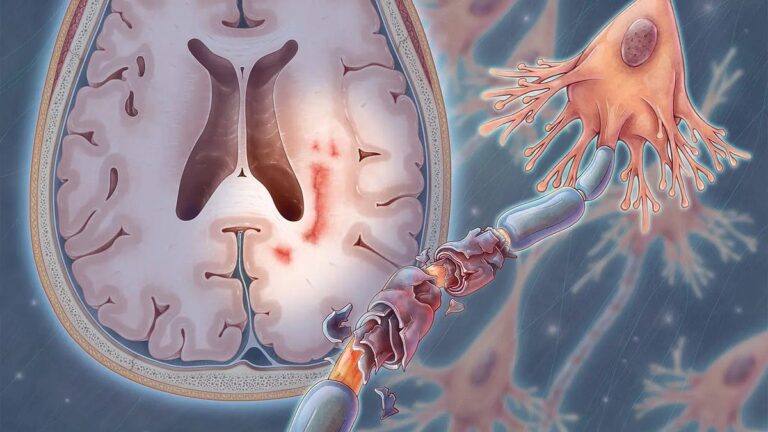
Multiple Sclerosis (MS) is a complex neurological disease whose diagnosis and follow-up require experience. Although advanced imaging and diagnostic criteria now allow MS to be diagnosed earlier, the diagnostic process can still be complicated in some cases.
Why Is a Second Opinion Important in MS Diagnosis?
Getting different opinions — especially at the initial diagnosis, in interpreting MRI findings or in treatment decisions — can offer patients important advantages.
Getting a second opinion in MS does not mean the current diagnosis is wrong. On the contrary, it is a valuable step in classifying the disease correctly, choosing the most suitable treatment and creating a long-term follow-up plan.
When Should You Get a Second Opinion?
In some situations a second opinion can be particularly helpful.
If You Have Just Been Diagnosed With MS
An MS diagnosis is an important diagnosis that requires lifelong follow-up.
Before starting treatment:
- Confirming that the diagnosis is correct
- Re-examining the MRI scans
- Determining the type of disease
- Reviewing treatment options
can be reassuring for many patients.
If There Are Different Opinions About Your MRI Results
MRI is an important tool in diagnosing MS, but some images may be interpreted differently by different specialists.
In particular:
- Suspicious lesions
- Atypical MRI findings
- White matter changes seen for the first time
- Images that may be confused with migraine or vascular disease
may require a second evaluation.
If New Lesions Develop Despite Treatment
If, despite being on MS treatment:
- New MRI lesions are forming
- New relapses are occurring
- The disease is progressing
the effectiveness of the current treatment should be re-evaluated.
At this point, a second opinion can help review the treatment strategy.
If a Change of Treatment Is Being Considered
The medicines used in MS differ in their effectiveness, side-effect profiles and monitoring requirements.
In particular:
If a switch to high-efficacy treatments such as these is planned, a second opinion can be useful for many patients.
If You Are Planning a Pregnancy
For women planning a pregnancy, MS treatment may need to be re-evaluated.
During this process, a second opinion can be helpful regarding:
- The medicines being used
- Treatment timing
- Pre-pregnancy planning
- Postpartum follow-up
If You Are Not Sure About Your Diagnosis
Some patients ask the following questions after diagnosis:
- Do I really have MS?
- Do my MRI findings definitely show MS?
- Could it be another disease?
- Do I have to start treatment?
These questions are completely natural.
In a disease like MS that requires long-term follow-up, it is very important that patients understand their diagnosis and treatment plan.
Diseases That Can Be Confused With MS
MS can sometimes be confused with other diseases.
For example:
- Neuromyelitis Optica Spectrum Disorder (NMOSD)
- MOG Antibody-Associated Disease (MOGAD)
- Migraine
- Small vessel disease
- Vasculitis
- Sarcoidosis
- Lupus and other rheumatological diseases
- Vitamin deficiencies
- Certain infections
All data must therefore be evaluated together during diagnosis.
What Is Reviewed in a Second-Opinion Evaluation?
A comprehensive second-opinion evaluation usually reviews in detail:
Clinical History
- First symptoms
- Relapse history
- Course of the disease
Neurological Examination
- Current neurological status
- Functional assessment
MRI Scans
- Brain MRI
- Spinal cord MRI
- Comparison of old and new MRI scans
Laboratory Results
- Blood tests
- CSF (spinal fluid) analysis
- Antibody tests
Treatment History
- Medicines used
- Response to treatment
- Side effects
Does a Second Opinion Mean Your Treatment Must Change?
No.
The aim of a second opinion is not necessarily to change treatment.
In some cases the current diagnosis and treatment plan are confirmed.
In other cases:
- Additional tests may be recommended.
- The follow-up plan may be updated.
- Different treatment options may be considered.
What matters is that the patient understands all the options in the light of scientific evidence.
What Does a Second Opinion Give the Patient?
A second opinion obtained at the right time:
- Can improve diagnostic accuracy.
- Can prevent unnecessary treatments.
- Can clarify treatment options.
- Can make decision-making easier for the patient.
- Can help create a sounder long-term follow-up plan.
A second opinion is an important safeguard, especially for newly diagnosed patients or those considering a change of treatment.
Second Opinion in MS with Prof. Dr. Emin Özcan
Throughout his neurology training and academic career, Prof. Dr. Emin Özcan has worked particularly on Multiple Sclerosis and neuroimmunological diseases.
He is an active member of the Turkish Neurological Society MS Study Group and the Neuroimmunology Study Group, and continues his work in MS diagnosis, treatment planning and long-term patient follow-up.
Second-opinion evaluations aim at:
- Checking the accuracy of the current diagnosis,
- Detailed review of MRI scans,
- Assessing disease activity,
- Reviewing treatment options,
- Determining the long-term follow-up strategy.
Every patient is evaluated individually, and decisions are shaped by current scientific evidence.
Frequently Asked Questions
Is it right to get a second opinion after an MS diagnosis?
Yes. Getting a second opinion is a common and natural approach, especially for newly diagnosed patients.
Should I bring all my MRI scans for a second opinion?
Yes. If possible, it is helpful to evaluate all old and new MRI scans together.
Does a second opinion mean I have to change my current doctor?
No. A second opinion does not oblige you to change your current treatment or doctor.
Can I get a second opinion while on treatment?
Yes. A second opinion can be helpful especially with new lesions, relapses or a planned treatment change.
Is an online second opinion possible?
A preliminary evaluation can be made from MRI scans, reports and medical documents, but a neurological examination may be needed for definitive medical decisions.
What documents should I bring for a second opinion?
- Brain MRI
- Spinal cord MRI
- MRI reports
- Blood tests
- CSF test results (if any)
- List of medications used
- Previous neurological evaluations
These documents allow a more comprehensive and sound evaluation.