
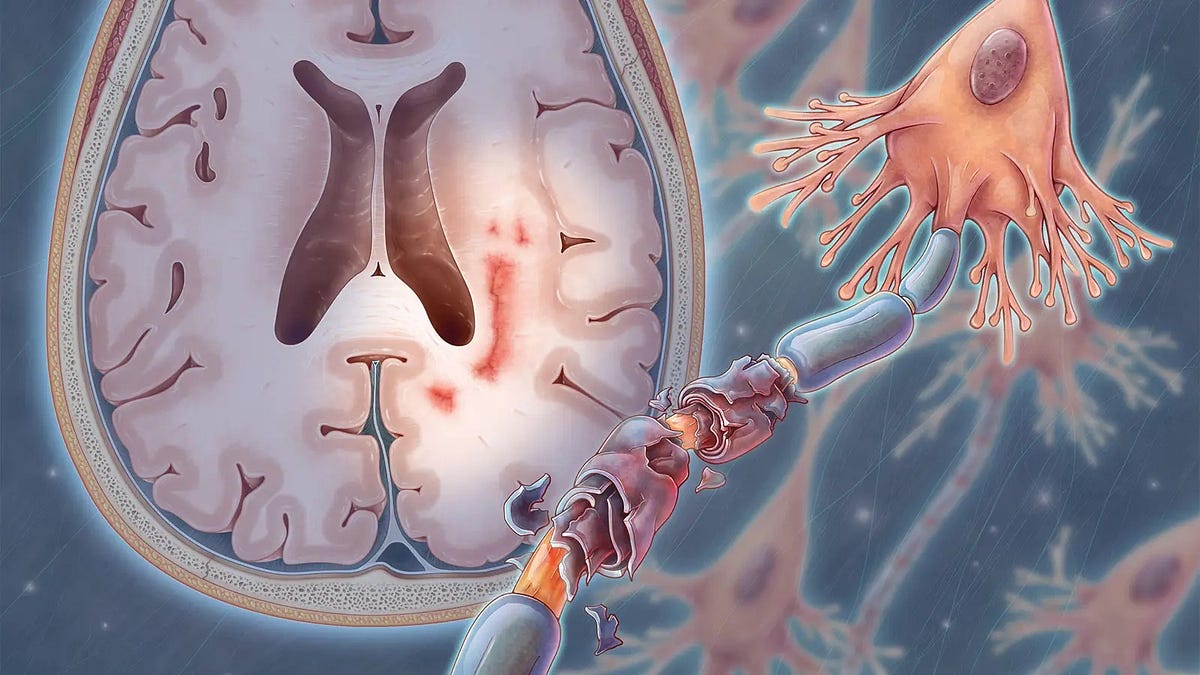
MS Relapse Treatment
What Is an MS Relapse and How Is It Treated?
What Is an MS Relapse?
Multiple Sclerosis (MS) is a chronic neurological disease that occurs when the immune system attacks the central nervous system. Its most common form, relapsing-remitting MS (RRMS), progresses with relapses and periods of recovery.
An MS relapse is defined as the appearance of new neurological symptoms or a marked worsening of existing ones. The symptoms must last at least 24 hours and must not be explained by infection, fever or another medical condition.
Relapses are important clinical events that show the disease is active, and they need to be evaluated properly.
What Are the Symptoms of an MS Relapse?
Symptoms during a relapse vary depending on the part of the nervous system affected.
The most common symptoms are:
- Loss of vision or blurred vision
- Double vision
- Numbness in the arms or legs
- Tingling
- Muscle weakness
- Balance problems
- Difficulty walking
- Dizziness
- Loss of coordination
- Speech difficulty
- Bladder control problems
- Severe fatigue
Not every new symptom means a relapse, so a specialist evaluation is important.
Is Every Worsening an MS Relapse?
No.
People with MS sometimes experience what is called a “pseudo-relapse”.
In particular:
- Febrile illnesses
- Urinary tract infections
- Flu and upper respiratory infections
- Intense stress
- Very hot environments
- Irregular sleep
can temporarily worsen existing symptoms.
In this case there may be no new inflammatory activity, and true relapse treatment may not be needed.
That is why new complaints should always be evaluated by a neurologist.
How Is an MS Relapse Diagnosed?
The patient’s complaints alone are not enough to evaluate a relapse.
The evaluation may include:
- Detailed neurological examination
- Medical history
- Review of current treatments
- Blood tests
- Infection screening when needed
- Brain and spinal cord MRI
MRI plays an important role, particularly in showing new inflammatory activity.
How Is an MS Relapse Treated?
The most commonly used treatment for MS relapses is high-dose corticosteroids.
The aims of cortisone treatment can be summarised as:
- Reducing inflammation in the nervous system
- Speeding up recovery
- Helping relapse symptoms improve faster
Cortisone is usually given intravenously and may last a few days depending on the patient’s condition.
In some cases oral corticosteroid treatments may also be preferred.
Does Cortisone Cure MS?
No.
This point is often misunderstood by patients.
Cortisone treatment:
✅ Can speed up recovery from a relapse.
However:
❌ It does not eliminate the disease.
❌ It does not prevent future relapses.
❌ It does not provide long-term disease control.
Relapse treatment and long-term MS treatment are therefore different concepts.
Possible Side Effects of Cortisone
Most patients tolerate short-term use well.
However, the following side effects may occur:
- Insomnia
- Palpitations
- Facial flushing
- Increased appetite
- Temporary rise in blood pressure
- Raised blood sugar
- Mood changes
These side effects are usually temporary and resolve after treatment ends.
What If Cortisone Does Not Work?
In rare cases relapse symptoms may not respond adequately to cortisone.
In such cases:
- Plasmapheresis (plasma exchange)
- Immunological treatment options
- Advanced evaluation methods
may be considered.
These decisions should be made at specialist centres according to the patient’s clinical condition.
Why Is MRI Follow-up Important After a Relapse?
After a relapse, improvement of symptoms alone is not enough.
MRI can assess:
- New lesion formation
- Active inflammation
- Disease activity despite treatment
In some patients, new disease activity can be detected on MRI without causing symptoms.
Regular MRI follow-up is therefore one of the cornerstones of modern MS management.
What Does Having Frequent Relapses Mean?
Frequent relapses or new MRI lesions while on treatment may suggest that the current treatment is not effective enough.
In this case, the following may be considered:
- Re-evaluating the treatment
- Switching to higher-efficacy treatments
- Getting a second opinion
may be considered.
Treatment decisions should be made not only on the number of relapses but together with MRI findings and clinical evaluation.
Might Treatment Need to Change After an MS Relapse?
In some cases, yes.
In particular:
- Recurrent relapses
- New active lesions on MRI
- Development of permanent neurological loss
- Ongoing disease activity on treatment
In these situations, the treatment strategy may be reviewed.
As there are many effective options in MS treatment today, an individualised approach is important.
MS Relapse Evaluation with Prof. Dr. Emin Özcan
For patients having an MS relapse, a correct evaluation is critical not only for treating current symptoms but also for the long-term management of the disease.
With his experience in MS and neuroimmunological diseases, Prof. Dr. Emin Özcan follows his patients in the light of scientific evidence in:
- MS relapse evaluation
- Interpretation of MRI scans
- Assessment of treatment effectiveness
- Treatment change decisions
- Second-opinion evaluations
The aim is not only to treat the current relapse but to determine the best strategy for preventing future neurological damage.
Frequently Asked Questions
How long does an MS relapse last?
Relapses can last days or weeks. Recovery time varies from person to person.
Does every MS relapse require cortisone?
No. Different approaches may sometimes be preferred for mild relapses. The decision should be made by a neurologist.
Does an MS relapse leave permanent damage?
Some relapses resolve completely, while others may leave permanent neurological effects.
If the MRI is normal, does that mean there is no relapse?
MRI is an important tool, but diagnosis does not rely on imaging alone. Clinical evaluation always comes first.
Is it normal to have a relapse while on treatment?
It can happen in some patients, but it may require the current treatment to be re-evaluated.
Should I get a second opinion after a relapse?
A second opinion can be helpful, especially for patients with frequent relapses, new MRI lesions or a treatment change under consideration.